
The Rise of the Well-Designed, Forgettable Event
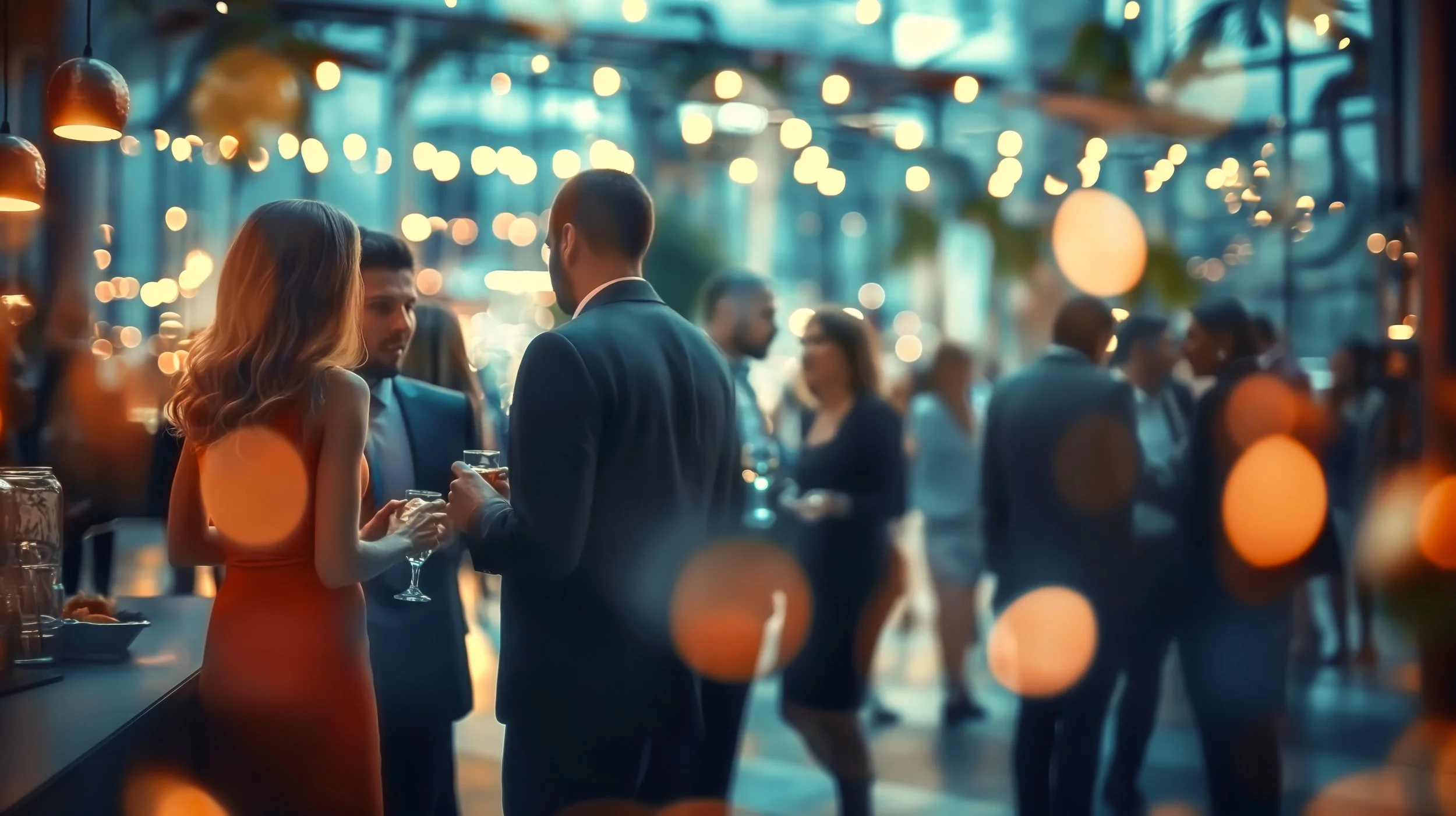
We just wrapped an event where the feedback caught us off guard a little.
Not because it was bad. People loved it. But what they kept coming back to wasn't the food or the music or the florals. It was that they kept noticing things. Late into the night, guests were still pointing details out to each other, circling back to moments they'd walked past the first time. More than one person said some version of: It felt like someone actually thought this through.
That reaction meant a lot. It also made us think about how rare it's gotten.
Here's the thing about the moment we're in right now. It has never been easier to make an event look designed. Canva, templated signage systems, an endless scroll of Pinterest boards and vendor lookbooks mean you can pull together something cohesive and polished without a huge lift. You can walk into a space that feels intentional without it actually being deeply thought through.
That accessibility is genuinely good. More people can create more beautiful things than ever before. But it's also created a kind of sameness that's hard to ignore once you see it. A lot of events now share the same structure, the same visual language, the same beats. They look great in photos. They just don't stay with you. What used to feel considered now feels expected, and expected doesn't leave an impression.
There's a real difference between something that looks designed and something that actually lands.
We think about this a lot in our work because the gap matters more than people realize. The event we just finished didn't work because everything matched; it worked because there was a clear throughline that showed up differently depending on where you were and what you were interacting with. Some details were quiet and easy to miss. Others were immediate. Each piece held up on its own. Together they built something that felt cohesive without feeling like the same idea repeated twelve times.
That distinction is where a lot of events flatten out. Cohesion gets mistaken for consistency at all costs, and when everything looks identical, nothing stands out. The experience becomes predictable, even if it's technically well executed. People move through it without really reacting to it.
What keeps people engaged is variation within a system. The sense that things are connected but not duplicated. It gives guests a reason to keep paying attention, to make their own connections, to feel like they're discovering something rather than being walked through it. That's when an event shifts from something people attend to something they actually experience.
None of this happens without someone holding the full picture, caring about the smallest decisions while never losing sight of how everything fits together. It takes more time. It takes more thought. It often means pushing past the first solution that works in favor of one that works better.
But it's worth asking what the alternative delivers. If an event blends in with everything else people have already seen, if they move through it without reacting, then it's not doing much beyond filling a few hours. And live events are one of the few places where people are genuinely present and paying attention. That's not something to treat lightly.
People don't leave talking about how everything matched. They leave talking about what caught them off guard. What made them look twice. What felt different enough to register.
As the tools keep getting better, more events will look polished. The baseline for good will keep rising. The difference will come down to how deeply the experience has been thought through and whether it actually gives people something to remember.
Because looking designed is already expected. The question is whether it leaves a mark.
SHARE THIS ARTICLE
